Types of CCTV Cameras and Their Applications
Choosing the right CCTV type according to installation site helps prevent security issues. This article introduces the most common CCTV camera types to help you decide which is suitable for you.
خلاصه تخصصی مقاله
Choosing the right CCTV type according to installation site helps prevent security issues. This article introduces the most common CCTV camera types to help you decide which is suitable for you.
موضوعات اصلی: پشتیبانی شبکه، دوربینهای، تصاویر، مدار، کیفیت، شبکه
What is a CCTV Camera?
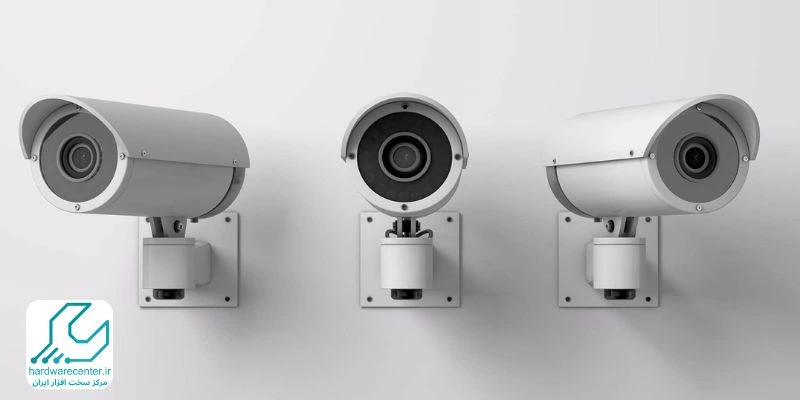
A closed-circuit television (CCTV) system provides surveillance by transmitting live or recorded video to a monitor or recorder. It is commonly used for physical security, monitoring movement, and controlling access in places requiring high security. In some cases CCTV is also used to monitor and control industrial and commercial processes.
Overview of CCTV Camera Types
There are various models and types of CCTV systems, each suitable for particular locations. Below we introduce them.
Analog CCTV Cameras
Analog cameras transmit images as analog signals. Images are captured by the sensor in analog form and transmitted via coaxial cables to a recording device or monitor. Benefits include lower price than digital cameras and the ability to support longer transmission distances; however, analog cameras generally offer lower image quality and fewer features compared to digital cameras.
Digital Cameras
Digital CCTV cameras transmit images digitally over network cabling to a recorder or monitor. Advantages include higher image quality, advanced features such as high-quality recording, motion detection, audio recording, night vision, and internet/network access for remote viewing. Digital cameras often offer enhanced security features, e.g., image encryption and controlled access.
Network Cameras (LAN)
Network cameras connect to local area networks (LAN) and are accessible over the internet. They capture images digitally and transmit to a network server. Benefits include internet access for remote viewing, higher image quality, advanced recording options, audio recording, night vision, motion detection, and stronger security features like encrypted images and remote access control.
PTZ Cameras
PTZ stands for Pan-Tilt-Zoom; these cameras can pan, tilt, and zoom. They provide wide coverage across large areas and are ideal for spaces such as conference halls, outdoor areas, stores, and transit facilities. They can zoom in for detailed viewing.
IP Network Cameras
IP CCTV cameras connect to networks via TCP/IP (wired or wireless). They offer many features such as internet connectivity, remote access, high-quality recording, motion detection with alerts, and potential for robust encryption and centralized management.
Thermal Cameras
Thermal cameras use infrared radiation to image temperature differences and can detect objects or people in darkness or obscured conditions. Applications include fire safety monitoring, theft prevention, monitoring hazardous areas, remote equipment monitoring, etc.
Infrared (IR) Cameras
IR cameras provide better imaging in night or low-light conditions. They illuminate the scene with infrared LEDs and can detect details beyond visible light; suitable for dark areas like parking lots or building entrances.
Types of CCTV Cameras by Lens Type
- Varifocal cameras: adjustable zoom and focal length via a varifocal lens.
- Fixed lens cameras: lens set to a fixed focal length with no adjustment.
- Panoramic lens cameras: multiple lenses provide a 360-degree view.
Maintenance and Repair
Cameras of any type may experience issues over time. For repairs, consult qualified technicians to fix network or hardware problems.
Getting CCTV Installed
Installing CCTV requires specialized work and is typically best done with networking professionals. For more information and installation requests, consult the appropriate technical team.
برای ارزیابی پایداری، امنیت و نگهداری این زیرساخت، راهنمای پشتیبانی شبکه را نیز مطالعه کنید.