Understanding Network Cable Types and Their Differences
This article introduces network cable types, highlights their differences, and outlines practical guidance for selecting the right cabling for reliable network infrastructure.
خلاصه تخصصی مقاله
This article introduces network cable types, highlights their differences, and outlines practical guidance for selecting the right cabling for reliable network infrastructure.
موضوعات اصلی: پشتیبانی شبکه، networks، Cable، cables، noise، shielding
Understanding Network Cable Types
In this article we explore the main categories of network cables and their differences. Understanding network cabling is essential for designing, configuring, and maintaining reliable network infrastructures. We review common cable types, their characteristics, and typical use cases to help you choose the right solution.
Coaxial cable
Coaxial cable consists of a copper core, insulation, a metallic shield, and an outer jacket. The core carries electrical signals and the shield helps protect against interference. Coaxial cables come in two main forms: thin Ethernet (Thinnet) and thick Ethernet (Thicknet), and are often used for longer-distance connections. They exhibit low signal loss and can perform better than some twisted-pair cables.
Thinnet (Thin coax)
Thinnet is a flexible coaxial cable with a relatively small diameter. The thickness is about 0.25 inch, capable of carrying signals up to roughly 185 meters without noticeable signal loss. Impedance is typically 50 ohms, and it has been used in RG-58 family deployments.
Thicknet (Thick coax)
Thicknet is a larger coaxial cable with a diameter of about half an inch. It can carry signals over long distances, up to about 500 meters, and was used in early Ethernet networks. Its longer reach made it suitable for certain local networks.
Twisted Pair
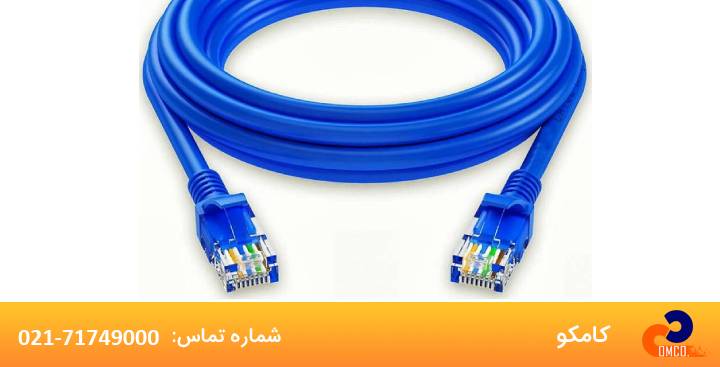
Twisted pair cables consist of one or more pairs of copper wires twisted together and covered with an insulating sheath. They are classified into three types: shielded twisted pair (STP), shielded fully twisted pair (SFSTP), and unshielded twisted pair (UTP). They can be connected in Straight or Cross configurations using standard RJ45 connectors. The performance depends on proper twisting, shielding and installation practices.
STP (shielded twisted pair)
This category uses a metallic shield to reduce interference and often includes a drain wire for grounding.
SFSTP
Similar to STP but with an additional shielding layer for greater protection against EMI and physical damage.
UTP
Unshielded twisted pair cables are the most common in LAN networks. They are lightweight, compact, and economical, but offer less protection against noise and physical damage compared to shielded variants.
Table comparing cable types
| Cable Type | Transmission Speed | Bandwidth | Max Length (no quality drop) | Features | Applications |
|---|---|---|---|---|---|
| Cat5e | Up to 1 Gbps | Up to 100 MHz | 100 meters | Cost-effective, noise reduction, suitable for everyday use | Home networks and small office environments |
| Cat6 | Up to 10 Gbps (short distances) | Up to 250 MHz | 55 meters (for 10Gbps), 100 meters (for 1Gbps) | Better noise resistance, higher quality than Cat5e | Medium networks and small infrastructures needing higher speed |
| Cat6a | Up to 10 Gbps | Up to 500 MHz | 100 meters | Advanced shielding to reduce noise, suitable for advanced applications | Data centers and professional networks |
| Cat7 | Up to 10 Gbps | Up to 600 MHz | 100 meters | Enhanced shielding with additional shielding layers, suitable for high-speed networks | Professional infrastructures and industrial environments |
| Cat8 | Up to 40 Gbps | Up to 2000 MHz | 30 meters | Designed for ultra-high speeds, best performance in noise reduction | Data centers, inter-rack communications |
| Fiber optic | Up to 100 Gbps and beyond | Unlimited (depends on fiber type) | Multiple kilometers | Very high speed, EMI resistant, suitable for long distances | Data centers, intercity links, sensitive networks |
Introduction to Cat8: advanced cable
Network cables are continually upgraded to meet growing speed and stability demands. Cat8 is among the latest high-speed cables designed for modern infrastructures. The following sections outline features and applications of this cable.
Key features of Cat8
- Very high transfer speed
- Cat8 supports up to 40 Gbps, ideal for data centers and enterprise networks.
- The high bandwidth enables low latency for demanding applications.
- Advanced bandwidth
- Supports bandwidth up to 2000 MHz with minimal quality loss.
- Strong shielding
- Cat8 uses full shielding (S/FTP) to mitigate EMI and interference, suitable for high-interference environments.
- Maximum length
- Maximum length for optimal high-speed operation is around 30 meters, making it ideal for inter-rack connections in data centers.
Cat8 applications
- Data centers: inter-rack server connections and high-speed network equipment.
- Industrial environments: reduced noise and reliable connectivity in interference-prone settings.
- High-speed organizational networks: rapid data transfer within internal infrastructures.
Advantages over previous generations
- Higher speed and bandwidth than Cat7 and Cat6a.
- Very high resistance to electromagnetic interference.
- Supports newer standards for data transmission in advanced networks.
Which network cable is more suitable for home use?
Cat5e and Cat6 are recommended for home and small offices due to cost effectiveness.
Are Cat7 and Cat8 necessary for all networks?
No, these cables are intended for data centers and advanced networks, not for basic home networks.
Which cable offers the best resistance to noise?
Cat7 and Cat8 provide stronger shielding and higher resistance against noise and interference.
برای ارزیابی پایداری، امنیت و نگهداری این زیرساخت، راهنمای پشتیبانی شبکه را نیز مطالعه کنید.