What is a Patch Panel and How Does It Benefit a Network?
A patch panel centralizes network cabling in one location, simplifying maintenance, troubleshooting, and future growth. This article defines patch panels, outlines their types, benefits, how to connect them to a switch, and how they differ from switches.
خلاصه تخصصی مقاله
A patch panel centralizes network cabling in one location, simplifying maintenance, troubleshooting, and future growth. This article defines patch panels, outlines their types, benefits, how to connect them to a switch, and how they differ from switches.
موضوعات اصلی: Patch، Panel، cables، Network، panels، switch
What is a Patch Panel and What Function Does It Serve in a Network?
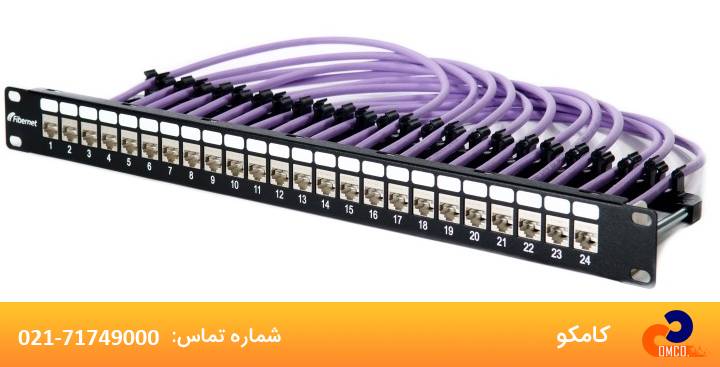
A patch panel is a hardware unit typically placed at the back of a rack or nearby to organize and centralize network cables. Cables terminate at the patch panel and then connect to switches, routers, or other network devices. Having a patch panel can simplify maintenance, expansion, and management, especially in offices, data centers, and organizations.
Types of Patch Panels
- Modular patch panel: Ports and jacks are individually replaceable, allowing various configurations. Commonly includes both copper and fiber port options.
- Non-modular patch panel: Fixed configuration with limited port variation.
Benefits and Use Cases
- Centralized and organized cabling
- Ease of future expansion
- Reduced maintenance costs and downtime
- Ability to connect multiple switches through a patch panel
Connecting a Patch Panel to a Switch
Place the patch panel near the switch, use appropriately lengthed cables to connect the panel ports to the switch ports, and ensure proper labeling for easy maintenance.
Patch Panel vs. Switch
The patch panel is a passive hardware element used to terminate cables, while a switch is an active device that manages and forwards data between network devices.
FAQ
- What is the difference between a patch panel and a switch?
- What are the advantages of modular panels?
- How is a patch panel connected to a switch?
Patch Panel Types and Applications
Patch panels vary by the type of cables they support and by construction. Copper panels suit CAT5/CAT6 cables, while fiber panels are used for optical cables. CAT6A panels typically offer higher speeds over longer distances, but cost more.
Buying Considerations
- Patch panels come in various sizes and port densities; choose a panel compatible with your cables and layout.
- Ensure cable length complies with network standards.
- Consider copper versus fiber and connector types based on your needs.
Conclusion
Choosing the right patch panel improves cable management, maintenance ease, and network scalability, contributing to overall network performance.
برای ارزیابی پایداری، امنیت و نگهداری این زیرساخت، راهنمای پشتیبانی شبکه را نیز مطالعه کنید.