What is the OSI model in networking? Understanding the network layers
This article explains the OSI model and its seven network layers, outlining the role and use of each layer in network design and troubleshooting.
خلاصه تخصصی مقاله
This article explains the OSI model and its seven network layers, outlining the role and use of each layer in network design and troubleshooting.
موضوعات اصلی: پشتیبانی شبکه، لایه، مدل، شبکه، OSI، میکند
OSI Model in Networking
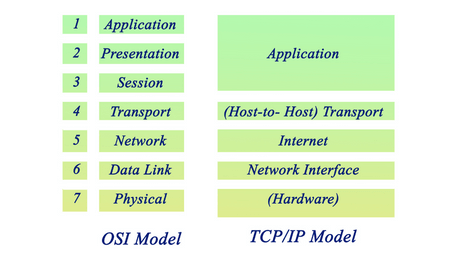
In the early 1980s, major computer and telecommunications companies sought a standard model for network communications. After extensive work, a standard was defined in 1983 and adopted by the International Organization for Standardization in 1984. The OSI model provides a universal language for devices to communicate across brands and models. A key advantage of this model is its usefulness for diagnosing network issues and facilitating troubleshooting. The seven layers are ordered from top to bottom as Application, Presentation, Session, Transport, Network, Data Link, and Physical.
OSI Layers Overview
Each layer has its own role, from enabling user interactions to transmitting raw bits. The layers, from top to bottom, are: Application, Presentation, Session, Transport, Network, Data Link, Physical.
Introduction to the seven OSI layers with the purpose of each layer
Application: protocols that enable user interaction with the network. Presentation: compresses and/or encrypts data. Session: manages communication sessions. Transport: ensures reliable data transfer and sequencing. Network: selects the best path for data delivery. Data Link: handles error checking and MAC addressing. Physical: transmits bits over physical media.
What is TCP/IP?
While OSI provides a seven-layer model, the TCP/IP model is more common in actual Internet use. It combines the OSI upper layers (Application, Presentation, and Session) into a single Application layer and uses Transport, Internet, and Network Interface layers to perform the lower-level functions. This combination aligns with practical network operation on the Internet and reflects OSI concepts.
Difference OSI vs TCP/IP
| Feature | OSI model | TCP/IP model |
|---|---|---|
| Number of layers | 7 layers | 4 layers |
| Purpose | Educational and analytical | Practical implementation on the Internet |
| Definition | Conceptual and standards-based | Operational and implemented |
| Layer composition | Independent | Combo of Application, Presentation, and Session into one layer |
| Practical example | Educational network structure in universities | Real-world LAN/WAN communication |
Conclusion
The OSI model remains a foundational concept in computer networking. By dividing the data transfer process into seven defined layers, it helps in understanding how devices communicate. Each layer has specific responsibilities, from physical transmission to encryption, session management, and software service provision at the application layer.
Awareness of this model is essential for network professionals, security teams, and system administrators, as it helps identify the layer where a problem occurs and guide corrective actions accordingly. The model also underpins practical standards such as TCP/IP, Ethernet, VLANs, and VPNs, and its concepts continue to influence modern data center and cloud network designs and VoIP services.
If you are learning networking or maintaining network systems, understanding OSI helps you:
- Understand network architectures in a systematic way.
- Perform faster and more targeted troubleshooting.
- Design enterprise networks with logical layer segmentation.
Ultimately, the OSI model is not only an educational tool but a roadmap for designing, maintaining, and evolving communications infrastructure.
برای ارزیابی پایداری، امنیت و نگهداری این زیرساخت، راهنمای پشتیبانی شبکه را نیز مطالعه کنید.