Key Considerations for Managing and Maintaining Corporate Servers
Effective management and maintenance of organizational servers are essential for security and productivity. This article outlines key practices to manage and maintain servers to ensure reliable operations and secure IT infrastructure.
خلاصه تخصصی مقاله
Effective management and maintenance of organizational servers are essential for security and productivity. This article outlines key practices to manage and maintain servers to ensure reliable operations and secure IT infrastructure.
موضوعات اصلی: server، data، security، access، can، maintenance
Key considerations in managing and maintaining corporate servers
In modern digital infrastructure, servers are the beating heart of organizational operations. All services, data processing, storage, and internal communications rely on their continuous, secure operation. Yet many organizations manage servers reactively rather than proactively.
Proper management and principled maintenance go beyond simple monitoring or applying updates. The process should include predicting outages, managing resources, enforcing security policies, and having a disaster recovery plan. Downtime of even a few minutes can disrupt critical processes, result in data loss, damage brand reputation, and incur financial losses.
Cyberattacks, software vulnerabilities, and misconfigurations demonstrate that merely deploying a server is not enough; maintaining its health is a strategic task. For this reason, successful organizations view server maintenance as an investment in the durability and security of their IT infrastructure.
Continuous monitoring of server performance
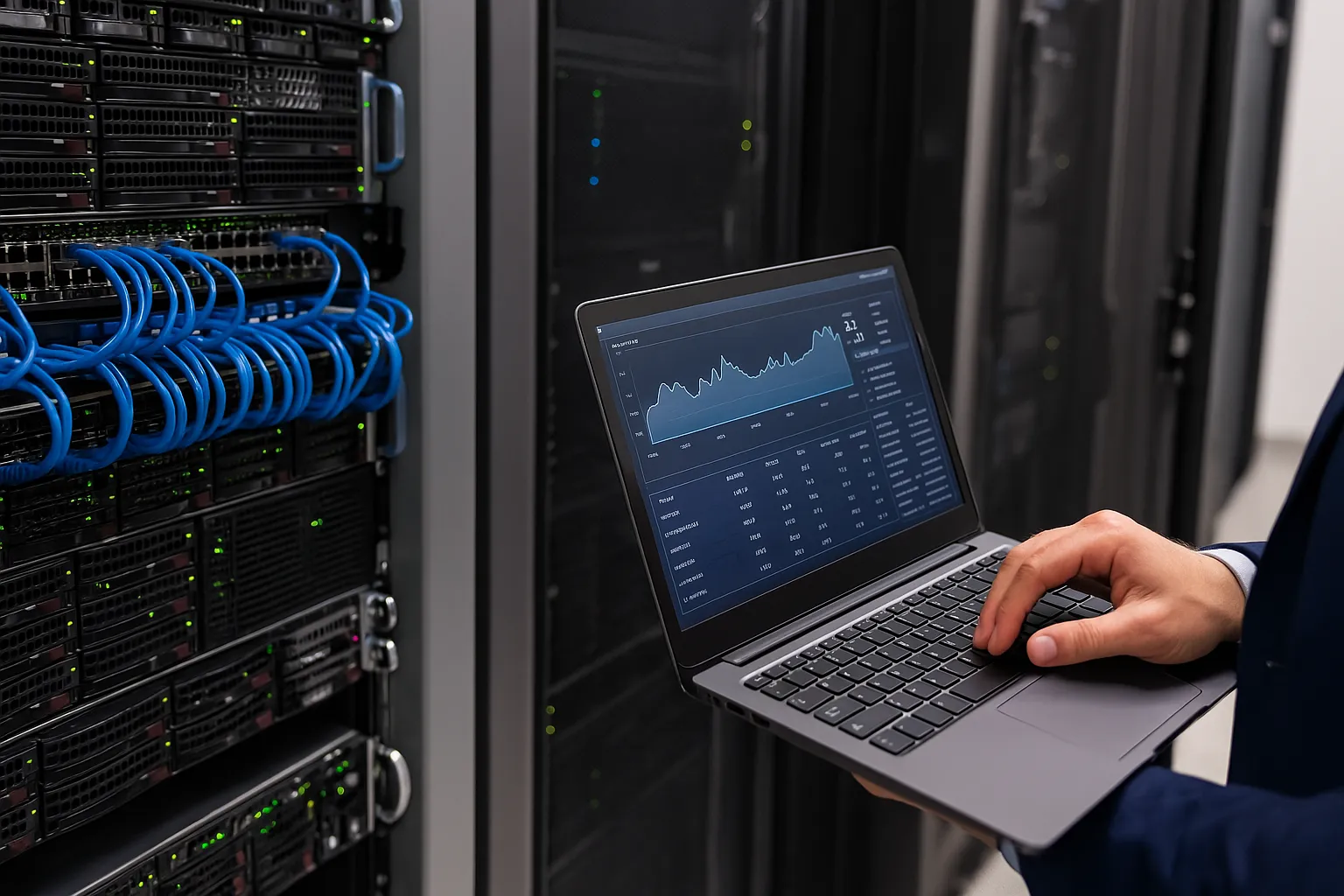
Server maintenance without ongoing monitoring cannot achieve desirable results. Regularly monitoring server status, including vital resources such as CPU, memory, and disk space, enables IT managers to take preventive action before issues escalate. When a server is continuously monitored, unusual patterns can be identified and resources can be allocated or optimized as needed.
For this purpose, professional monitoring tools such as Nagios, Zabbix, PRTG Network Monitor and SolarWinds help network managers examine server performance in real time and receive precise resource reports. These tools provide instant alerts when problems arise, allowing you to address issues before they affect services. As a result, continuous monitoring increases server reliability and availability, preventing unexpected downtime.
Regular software and security updates
One of the core principles of server maintenance is performing regular software and security updates. Updating the operating system and installed software helps improve performance and guard against security vulnerabilities. If a server runs outdated software or lacks updates, the risk of intrusion rises significantly.
Security updates play a crucial role in countering cyber threats. When vendors identify new vulnerabilities, security patches are released to address them. Without these updates, a server may be exposed to malware, unauthorized access, and DDOS attacks. Software updates also enhance performance and compatibility with newer technologies. Given the importance of server maintenance, administrators should periodically schedule and execute regular update programs. Tools such as WSUS can help manage updates efficiently, ensuring routine server operations are not disrupted while keeping security and performance optimized.
Server security management
Security management is vital in corporate server maintenance. Initial steps include properly configuring firewalls and controlling access to servers. Firewalls act as the first line of defense, preventing unauthorized access. By setting appropriate firewall rules, access to the server can be restricted to specific devices and IP addresses, increasing protection.
Access control is another core principle. It involves limiting permissions for different users based on actual needs. Creating roles and varying access levels ensures that only authorized personnel can access particular data and services.
- Encryption protects data by making it unreadable to unauthorized parties, effective for data in transit and at rest.
- Multi-factor authentication (MFA) helps prevent unauthorized access. Enabling MFA requires an additional verification factor beyond a password, such as a code from an authentication app or SMS. This prevents attackers from gaining access even if a password is compromised.
Thus, by combining firewalls, precise access control, encryption, and MFA, corporate server security can be significantly increased to protect sensitive information.
Regular data backups are another critical maintenance activity. Backups should be encrypted, tested, and stored securely offsite or separately from the main server to be reliable in a crisis. Regular backups help prevent downtime and data loss in case of hardware failure, cyberattacks, or human error.
There are various backup approaches, including local backups on physical devices and cloud backups where data is securely stored in the cloud. A hybrid approach can provide extra copies and greater security. Backups should be performed regularly and cover critical data. Regularly testing backup copies and verifying that they can be restored is essential. Many organizations adopt a 3-2-1 backup policy: at least three copies of data, on two different media, with one copy offsite.
More: five effective methods for organizational data backup
Server resource management
Server resource management is a fundamental part of maintaining corporate servers to ensure efficient operation and prevent overload. Critical resources such as CPU, memory, disk space, and network bandwidth should be monitored and managed regularly to optimize utilization.
CPU management involves optimizing processes and preventing unnecessary programs from running. Memory should be managed to ensure adequate availability for critical applications, avoiding slowdowns or outages. Disk space must be regularly checked and freed of unnecessary data to provide room for new information. Monitoring tools like Nagios and Zabbix help administrators stay informed about rising server load and take necessary actions.
Ultimately, effective resource management prevents performance issues and unexpected outages, boosting server efficiency and improving user experience for staff and customers.
برای ارزیابی پایداری، امنیت و نگهداری این زیرساخت، راهنمای پشتیبانی شبکه را نیز مطالعه کنید.