Comprehensive Guide to Energy Optimization in Data Centers: From Theory to Practice
This guide examines practical approaches to improving energy efficiency in data centers—from measuring consumption to designing efficient layouts, energy management, and renewable energy integration. It emphasizes practical steps to reduce costs and environmental impact while maintaining reliability.
خلاصه تخصصی مقاله
This guide examines practical approaches to improving energy efficiency in data centers—from measuring consumption to designing efficient layouts, energy management, and renewable energy integration. It emphasizes practical steps to reduce costs and environmental impact while maintaining reliability.
موضوعات اصلی: Energy، Data، cooling، efficiency، consumption، Optimization
Comprehensive Guide to Energy Optimization in Data Centers: From Theory to Practice
Data centers play a vital role in supporting businesses and organizations. With growing demand for digital services and rapid data growth, these facilities require substantial energy resources. High energy consumption not only increases operational costs but also has broad environmental impacts. Therefore, energy optimization in data centers is a necessity with positive economic and environmental benefits.
This article explores practical and applicable strategies to reduce energy consumption in data centers, covering everything from energy measurement to advanced technologies and organizational culture. These actions help reduce costs and improve efficiency and sustainability of data centers.
1. Energy consumption assessment in data centers
Assessing energy consumption is the first step in the optimization process. This assessment helps you gain a precise understanding of energy use across data center components and identify areas for improvement. Key factors include:
- Measuring energy consumptionEnergy use of all equipment including servers, cooling systems, storage devices, UPSs, and other devices in the data center should be measured. Data can be obtained through energy monitoring tools and energy management software.
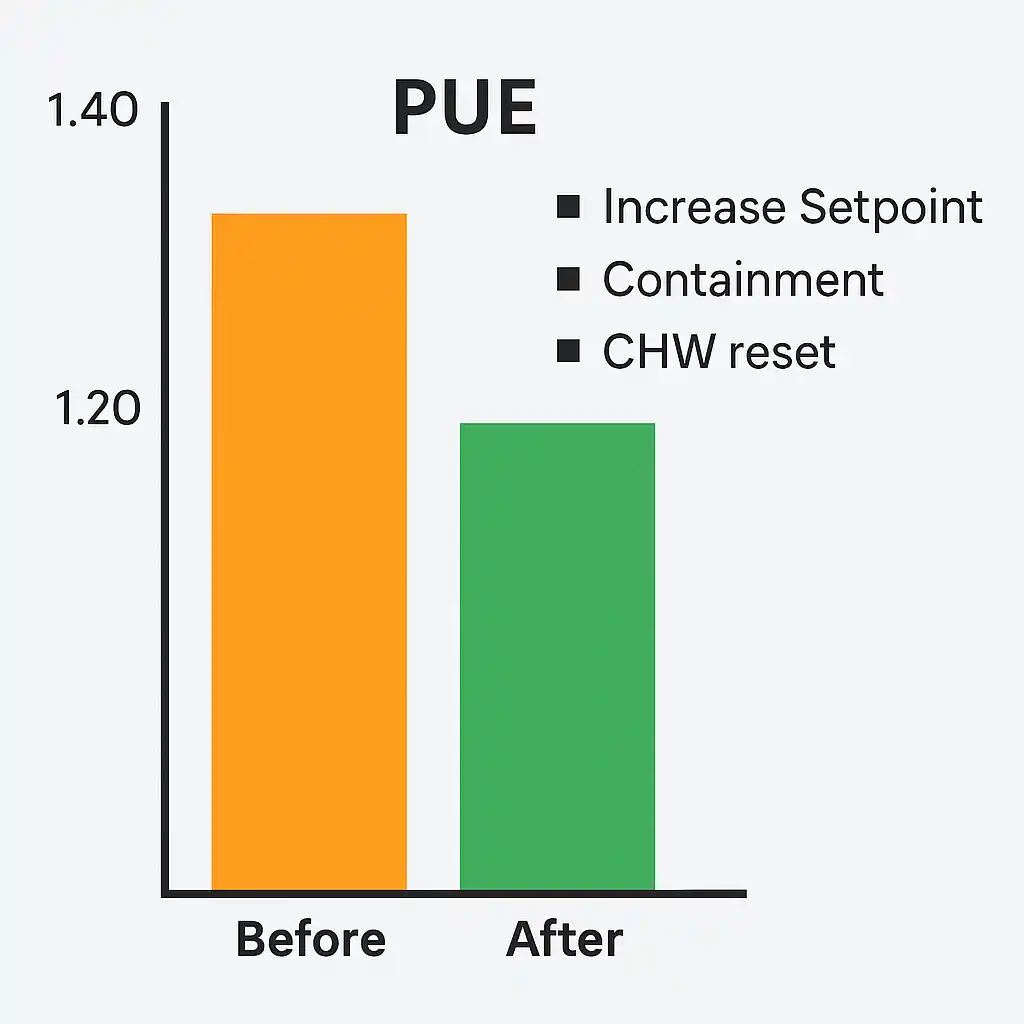
- Analysis of Energy Efficiency metrics (PUE)PUE (Power Usage Effectiveness) indicates how much of the energy consumed is used for IT processing versus supporting infrastructure. A lower PUE denotes higher efficiency. For example, a PUE of 1.5 means that for every 1.5 watts of total energy, 1 watt goes to IT processing and the rest to supporting systems like cooling.
- Identifying weaknesses and improvement areasAfter measurement and analysis, weaknesses and areas for improvement are identified, such as old equipment with low efficiency, improper server layouts, and inefficient cooling systems.
- Environmental temperature managementManaging ambient temperature is crucial since high temperatures increase cooling energy needs. Using temperature monitoring and precise environmental control helps optimize energy use.
Table: Sample PUE benchmarks in data centers
| Data Center Type | Average PUE | Energy Efficiency Level | Performance Description | Example Use |
|---|---|---|---|---|
| Traditional (Old) Data Centers | 2.0 – 2.5 | Poor | High energy use in cooling and UPS | Older government organizations or centers lacking smart systems |
| Standard Modern Data Centers | 1.5 – 1.8 | Moderate | Hot/Cold Aisle layout and basic energy monitoring | Mid-size companies and local cloud providers |
| Optimized and Smartly Managed Data Centers | 1.3 – 1.5 | Good | Free cooling, automated temperature control, low-power equipment | IT companies and professional hosting providers |
| Green Data Centers | 1.1 – 1.3 | Very high | Renewable energy use and AI-driven energy management | Advanced centers like large hyperscalers |
| Best Practice (Global Ideal) | 1.0 – 1.2 | Optimal | Nearly all energy used for processing data | Global hyperscale and cloud data centers |
Energy assessment is essential for avoiding inefficient or harmful optimization actions and enables precise planning for improvements. It also helps reduce environmental impact and advance organizational sustainability goals.
2. Efficient data center design
Efficient design is a key driver of energy reduction and performance optimization. A well-considered design directly affects energy productivity and operational costs. This section discusses key design elements and practical optimization strategies.
Server layout and airflow management
Correct server placement and airflow management are crucial for reducing energy consumption. Improper layouts can raise ambient temperatures and cooling requirements.
- Hot/Cold Aisle implementationSeparating cold intake and hot exhaust aisles improves airflow and reduces cooling energy needs.
Blanking panels
Blanking panels between racks prevent hot air ingress into cold aisles, improving cooling efficiency and reducing energy use.
Cable management
Well-organized cables prevent obstruction of airflow and support cooling efficiency.
Choosing energy-efficient equipment
Energy-efficient components significantly impact overall energy use. Key points include:
- Low-power servers and storageServers and storage with energy-efficient processors and virtualization capabilities help reduce consumption.
- High-efficiency power suppliesPower supplies with high efficiency reduce energy losses and improve overall efficiency.
- Smart and efficient coolingSmart cooling solutions that automatically regulate temperature and humidity lower energy use.
Renewable energy in design
Integrating renewables reduces dependence on fossil fuels and environmental impact. Options include:
- Solar panelsInstallations on rooftops or adjacent areas can provide supplementary energy for cooling and equipment.
- Wind turbinesIn suitable windy locations, wind turbines can supply energy to data center equipment and reduce grid consumption.
Smart energy management systems
Energy Management Systems (EMS) enable precise energy monitoring and optimization. Features include real-time monitoring, automated optimization, and comprehensive reporting.
- Real-time monitoringProvides live energy usage data for each data center section.
- Automated alertsAlerts are generated automatically when abnormal consumption is detected.
- Comprehensive reportingSupports decision-making and continuous improvement.
3. Smart energy management
Smart energy management is a powerful approach to reducing costs and improving efficiency through modern technologies and analytics. This process includes continuous monitoring, optimal system adjustments, and data-driven decision-making.
Conclusion
Efficient data center design requires attention to physical layout, high-efficiency equipment, renewable energy integration, and smart energy management systems. Implementing these strategies can significantly reduce energy consumption and support sustainability goals.
برای ارزیابی پایداری، امنیت و نگهداری این زیرساخت، راهنمای پشتیبانی شبکه را نیز مطالعه کنید.