Advantages and Disadvantages of Cloud-Based Networks
This article analyzes the benefits and drawbacks of cloud-based networks and their impact on cost, scalability, accessibility, and security.
خلاصه تخصصی مقاله
This article analyzes the benefits and drawbacks of cloud-based networks and their impact on cost, scalability, accessibility, and security.
موضوعات اصلی: پشتیبانی شبکه، ابری، خدمات، استفاده، دسترسی، ارائهدهنده
Introduction
With the rapid growth of information and communications technology, cloud-based networks have become a key tool for businesses and organizations. These networks provide quick access to computing resources, storage, and applications, allowing users to access their data from anywhere. This article examines the advantages and disadvantages of cloud-based networks to help readers gain a better understanding of this technology and its impact on businesses. A careful evaluation of these advantages and disadvantages supports better migration decisions to cloud networks.
Advantages of Cloud-Based Networks
1. Cost Reduction
Cloud services can reduce costs associated with hardware, software, and maintenance. Rather than heavy upfront investments in physical infrastructure, costs can be paid on a monthly or yearly basis.
2. High Scalability
Cloud networks allow you to easily scale resources up or down to match changing business needs, enabling rapid responses to market changes and demand.
3. Easy and Anywhere Access
You can access data and applications from any location and at any time. This is especially valuable for teams that work remotely.
4. Backup and Recovery
Many cloud providers offer automatic backup and recovery capabilities, helping prevent data loss due to hardware failure, human error, or cyberattacks.
5. Automatic Updates and Maintenance
Cloud providers typically handle software and security updates, reducing the need for ongoing in-house maintenance.
6. Collaboration and Sharing
Cloud services provide tools and platforms that facilitate collaboration and data sharing, helping teams work more effectively.
7. Resilience and Business Continuity
Cloud services help businesses continue operations during disasters, cyberattacks, and other incidents. Automated backups and recovery ensure vital data remains accessible and enable quick recovery.
Disadvantages of Cloud-Based Networks
1. Security Issues
Storing sensitive data in the cloud may introduce risks. Data may be accessible on provider servers that could be hacked or subject to unauthorized access.
2. Internet Dependency
Access to cloud services requires a stable and fast Internet connection. Internet outages can render data and services unavailable.
3. Limited Control over Infrastructure
With cloud services, you do not have full control over the underlying infrastructure and must trust the provider. This can lead to changes in the infrastructure without client notice.
4. Hidden Costs
Costs for data transfer, backups, or usage of additional services may increase over time and may not be clear at the outset.
5. Legal and Privacy Issues
Storing data on servers located in other countries can raise legal and privacy concerns. Laws of different jurisdictions can affect data access and usage.
6. Provider Dependence
High dependence on a single cloud provider can create risks. Technical or financial problems at the provider can affect service availability.
7. Performance and Latency
In some cases, cloud services may introduce delays in data access or degrade system performance, especially when there is significant geographic distance between users and cloud servers.
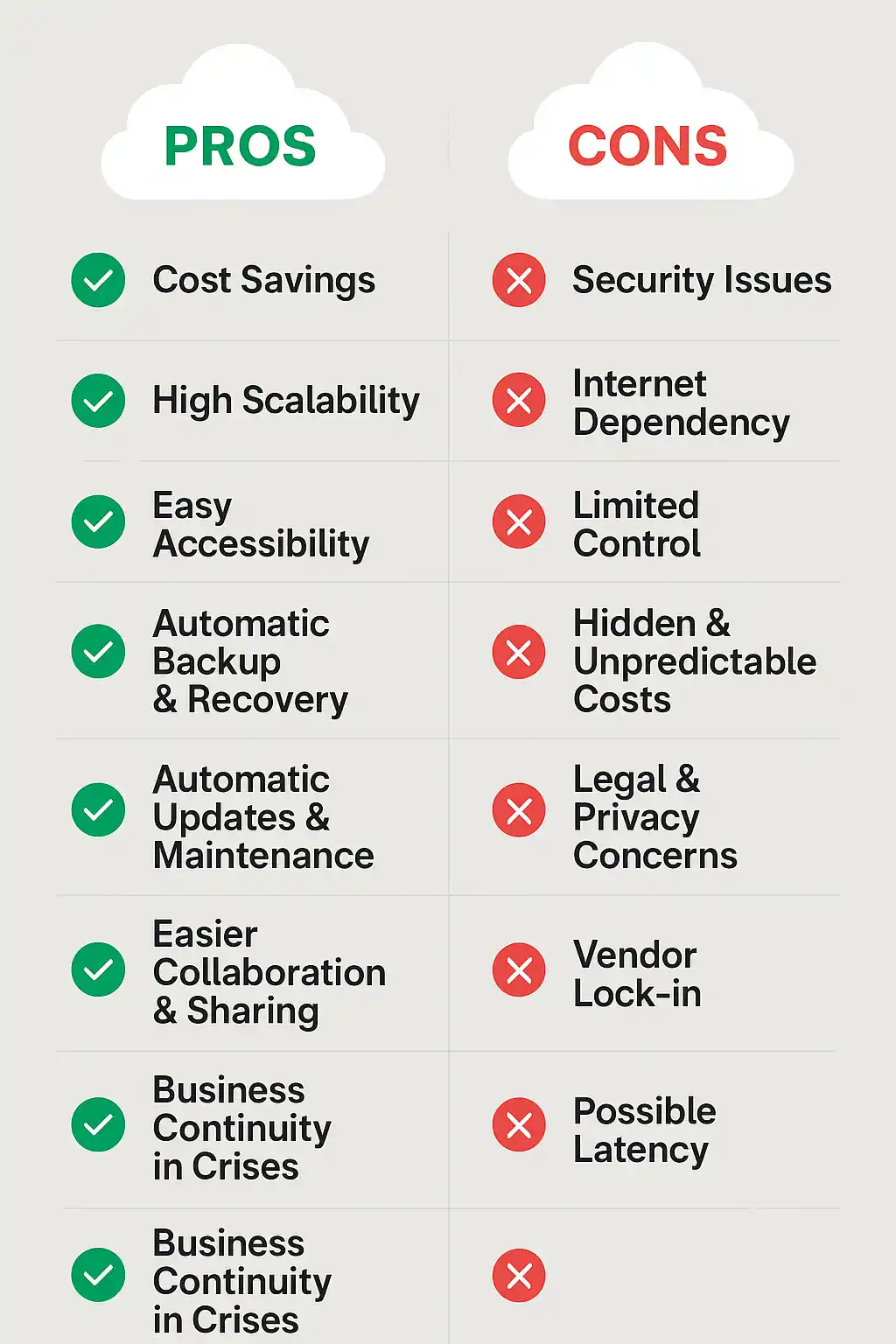
| Pros | Cons |
|---|---|
| Reduced hardware and maintenance costs | Security concerns and risk of data intrusion |
| High scalability and flexibility | Full reliance on Internet connectivity |
| Easy access from anywhere | Limited control over infrastructure |
| Automated backups and recovery | Hidden and unexpected costs |
| Automatic updates and maintenance | Legal and privacy issues |
| Easier collaboration and sharing | Dependence on the provider |
| Resilience and business continuity during crises | Potential latency and performance degradation |
نتیجه گیری
Cloud-based networks offer significant benefits such as cost reductions, high scalability, easy access, and automated backups, which can enhance business efficiency and productivity. However, concerns about security, dependence on the Internet and provider, and hidden costs remain. To maximize the benefit, a careful analysis of advantages and disadvantages and implementing strategies to manage challenges are essential.
What is a Cloud Network?
A cloud network uses virtual servers to provide services such as storage, processing, and data management.
What are the main advantages of Cloud Services?
Cost reduction, high scalability, easy access, and automated backups are among the main advantages.
Is Cloud Computing Secure?
Security depends on provider policies and protocols. Using encryption and multi-factor authentication can improve security.
What are the disadvantages of Cloud Services?
Security concerns, dependence on Internet and provider, and hidden costs are among the main drawbacks.
How can I choose the best Cloud Provider?
Consider security, reliability, cost, and customer support. Reading user reviews and conducting thorough research is also helpful.
برای ارزیابی پایداری، امنیت و نگهداری این زیرساخت، راهنمای پشتیبانی شبکه را نیز مطالعه کنید.