Keystone Network Connectors: A Comprehensive Guide to Types and Applications
This article provides a comprehensive overview of keystone network jacks, examining shielding, CAT categories, and body material to support informed decisions in network design and maintenance.
خلاصه تخصصی مقاله
This article provides a comprehensive overview of keystone network jacks, examining shielding, CAT categories, and body material to support informed decisions in network design and maintenance.
موضوعات اصلی: Keystone، bandwidth، Network، MHz، Keystones، Types
Types of Keystone Network Connectors
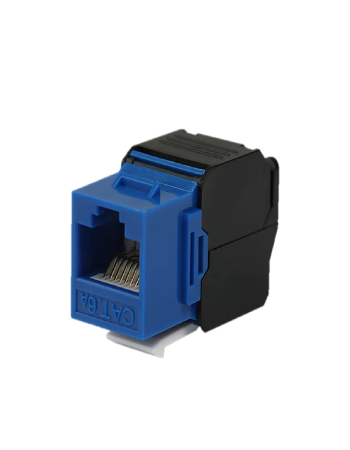
The keystone network jack, or keystone outlet, is among the essential components in computer network design, bridging the network cable to passive devices such as switches and patch panels. These jacks come in various types to match different networking needs. In this article we examine the main categorization of keystone network connectors.
Keystone network based on shield type
Keystone jacks are classified by presence or absence of shielding into two main categories: UTP and SFTP. This categorization reflects protection from noise and signal integrity.
Keystone UTP
Designed for unshielded cables (UTP). Typically, connections to ports are made via appropriate patch cords to ensure reliable terminations.
Keystone SFTP
Used with shielded and foil-wrapped cables (SFTP); these jacks include shielding and generally cost more, but offer better protection against interference.
Types of keystone network by CAT or Category
CAT refers to category standards that define performance, speed, and generation of technology used. This section reviews keystone types by CAT.
Keystone CAT5
Entry-level category with up to 100 Mbps speed and 100 MHz bandwidth.
Keystone CAT5e
Enhanced version supporting up to 1 Gbps and 100 MHz bandwidth.
Keystone CAT6
Widely used with higher speed and bandwidth than CAT5/5e; suitable for many office networks.
Keystone CAT6a
Advanced CAT6 with up to 10 Gbps and 500 MHz bandwidth.
Keystone CAT7
More capable than CAT6a, supports 10 Gbps up to 100 m and bandwidth up to 600 MHz.
Keystone CAT7a
Enhanced CAT7 with bandwidth around 1200 MHz and similar speeds.
Keystone CAT8
Latest generation with very high speed; commonly used by large enterprises over short distances, supporting up to 40 Gbps and 2000 MHz bandwidth over lengths up to 30 m.
Keystones by body material
Keystones are categorized by body material into metal and PVC. SFTP keystones are typically metal, while UTP keystones are PVC. In environments near power cables, metal housings may be used to provide grounding compatibility.
Keystone types by dimensions
Keystones vary in the space they occupy in a frame or channel: single-module narrow keystones versus dual-module wide keystones. Two single-module units occupy one slot, while one dual-module unit occupies a single slot.
برای ارزیابی پایداری، امنیت و نگهداری این زیرساخت، راهنمای پشتیبانی شبکه را نیز مطالعه کنید.